The light
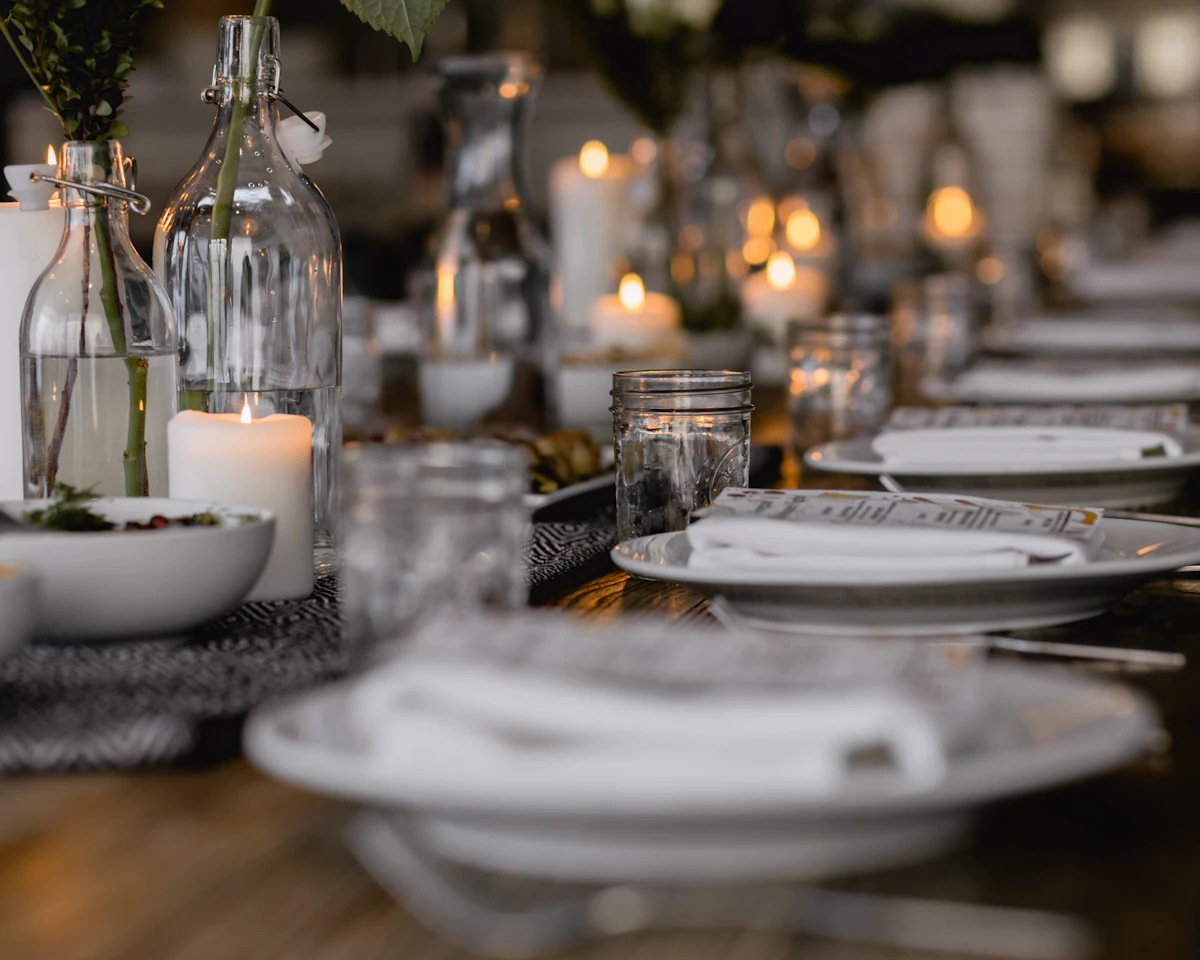
Beeswax candles on every table, wall lamps on hand dimmers, not one spotlight above a plate. By midnight the salon glows almost entirely from flame.
Home / The House
Four years of rebuilding, Warsaw craftsmen, and a capacity kept deliberately small. This page is about the building, and about the way an evening moves through it.
 The house
The house went up in 1904 and came through the war with a damaged roof and a burnt-out stairwell. For forty years it held a clothing co-operative, and after that a warehouse. When we found it, the original plasterwork was still in place — under seven coats of oil paint.
The work took four years. We worked with Warsaw craftsmen who still run cornices in plaster and glaze windows with drawn glass. We added nothing the house did not already have — we took off what had been laid on later.
An evening here is composed like a piece of music: the light falls half a tone every hour, service slows after the second course, and after ten the piano takes the place of the silence. Nobody will tell you when to get up.
Beeswax candles on every table, wall lamps on hand dimmers, not one spotlight above a plate. By midnight the salon glows almost entirely from flame.
Hand-washed linen, white porcelain without ornament, blown crystal. The table is laid beside the guest, not before they arrive.
No background music before nine. The walls were deadened so that the next table cannot follow your conversation.
Eight courses spread across three hours. The waiter does not ask every five minutes whether everything is fine; they appear when they are needed.
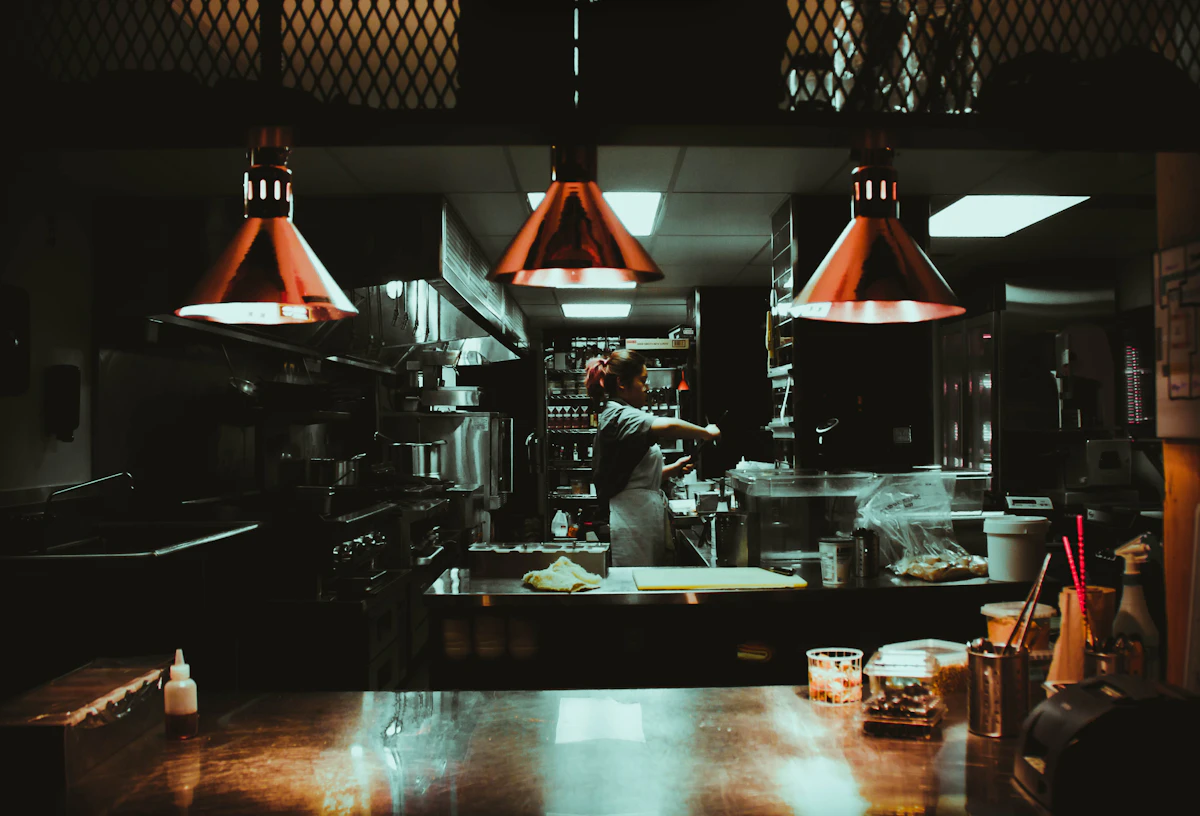
Twelve people in the room and the kitchen for forty-four covers. Most have been with us since we opened in 2019.
 The kitchen
Some nights are simply dinner. Others have a reason, and the reason is usually someone who grew, pressed or wrote something worth an hour of the evening.